Ink Over Pixels: The Science Behind Why Vietnamese Students Are Returning to Handwritten Notes
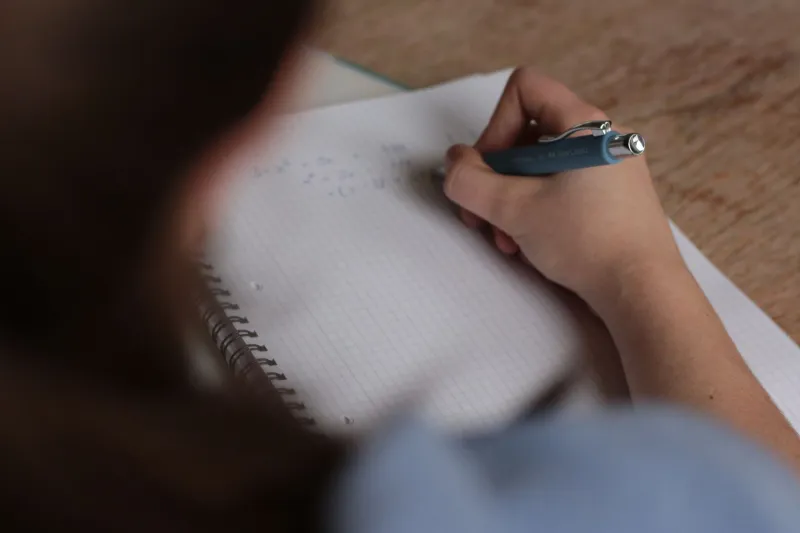
Walk into a traditional classroom in Hanoi or Ho Chi Minh City and you will likely notice something that feels almost quaint by contemporary standards: rows of students bent over notebooks, pens moving deliberately across the page. No glowing screens. No keyboard clicks. Just the measured scratch of ink meeting paper. While much of the world has raced toward digital note-taking as the default mode of academic life, a growing number of Vietnamese educators and students are pushing back — and the neuroscience is firmly on their side.
For American college students who have normalized the practice of transcribing lectures verbatim onto a laptop, this shift may seem counterintuitive. Yet mounting evidence suggests that the very friction that makes handwriting slower is precisely what makes it more powerful.
What the Research Actually Says
In a widely cited 2014 study published in Psychological Science, researchers Pam Mueller and Daniel Oppenheimer found that students who took notes by hand consistently outperformed their laptop-using peers on conceptual questions — even when laptop users had recorded far more content. The explanation lies in the nature of the task itself. Because handwriting is slower, students are forced to process and paraphrase information in real time rather than transcribing it passively. That act of synthesis, researchers argue, is where genuine learning begins.
Dr. Karin James, a neuroscientist at Indiana University, has demonstrated through neuroimaging studies that the act of forming letters by hand activates a neural circuit in the brain — including regions associated with reading and language — that typing does not engage in the same way. In effect, writing by hand teaches the brain to recognize and internalize information through a multisensory experience: the pressure of the pen, the movement of the wrist, the visual feedback of words forming on a page.
"There is something irreplaceable about the physical engagement," says Dr. James. "The brain is not a passive recorder. It learns by doing, and handwriting is one of the most cognitively demanding forms of 'doing' we ask of students."
A Tradition Rooted in Vietnamese Pedagogy
For Vietnamese educators, none of this is particularly surprising. The emphasis on meticulous handwriting and carefully organized notebooks has deep roots in Vietnamese educational culture, influenced in part by Confucian traditions that prize disciplined practice, patience, and the cultivation of understanding over the mere accumulation of facts.
In many Vietnamese schools, the quality of a student's notebook is considered a reflection of their intellectual seriousness. Students are taught from an early age to write clearly, to organize their thoughts hierarchically on the page, and to review and annotate their notes as a form of active study — not simply as a record-keeping exercise.
Nguyen Thi Lan, a secondary school teacher in Da Nang with over two decades of classroom experience, describes this philosophy plainly: "We do not write to remember what the teacher said. We write to understand what we ourselves are thinking. The notebook is where confusion becomes clarity."
This framing — the notebook as a cognitive workspace rather than a storage device — represents a fundamentally different relationship with note-taking than what most American students have been taught.
The Laptop Trap in American Classrooms
In the United States, laptop use in lecture halls has become so normalized that many students feel anxious without one. Yet professors across the country have begun reporting a familiar paradox: students who type the most often retain the least. Several universities, including MIT and Princeton, have experimented with laptop-free classroom policies, reporting improvements in student engagement and comprehension.
The issue is not simply distraction — though that is certainly a factor, given that research shows students with open laptops spend a significant portion of class time on non-academic browsing. The deeper problem is what cognitive scientists call "shallow processing." When information flows from ear to keyboard without meaningful mental engagement, it is encoded weakly and forgotten quickly. The brain, in essence, outsources its work to the device.
Handwriting interrupts this outsourcing. It demands that students slow down, make choices about what to capture, and construct meaning on the fly. That process of active construction is, according to learning science, one of the most reliable routes to long-term retention.
Practical Strategies for the American Student
Adopting a handwriting practice does not require abandoning technology wholesale. Many students find that a hybrid approach — using a laptop for research and organization while reserving pen and paper for lecture notes and review — captures the benefits of both worlds.
Here are several evidence-informed strategies drawn from Vietnamese classroom traditions that American students can integrate into their study routines:
Start with a structured notebook format. Vietnamese students are often taught to divide their pages into sections: a main note-taking column, a margin for questions and keywords, and a summary section at the bottom. This format, similar to the Cornell Note-Taking System, encourages active engagement during and after class.
Rewrite, don't just review. Rather than passively rereading notes before an exam, try rewriting key concepts from memory. This technique — known in cognitive science as retrieval practice — dramatically strengthens long-term retention and is a cornerstone of traditional Vietnamese study habits.
Embrace the slowness. Resist the urge to capture everything. Choosing what to write down is itself a form of comprehension. If you cannot paraphrase an idea in your own words, that is a signal that you have not yet understood it.
Annotate actively. After class, return to your notes and add questions, connections to other material, or brief personal reflections. This second-pass engagement is where much of the real learning happens.
A Quiet Revolution Worth Considering
The Vietnamese classroom's quiet insistence on the handwritten notebook is not nostalgia for its own sake. It is a pedagogically grounded commitment to depth over speed, understanding over transcription, and long-term mastery over short-term convenience. As American students navigate an increasingly distracted academic environment, this analog tradition offers something genuinely valuable: a reminder that some of the most sophisticated learning tools ever devised fit neatly in a pencil case.
The notebook revolution, it turns out, may be less about rejecting the digital world and more about reclaiming the kind of focused, embodied thinking that no app has yet managed to replicate.