Matching Your Study Environment to What You're Actually Trying to Learn
The Myth of the Universal Study Method
Walk into any college campus library in the United States and you will find students who swear by total silence, students who work best with background noise, students who review alone with flashcards, and students who insist that explaining concepts aloud to a friend is the only thing that actually works. Each of them is right — for a certain kind of learning.
The productivity conversation in American education has long been dominated by one-size-fits-all prescriptions: always use active recall, always study in groups, always eliminate distractions, always take handwritten notes. These recommendations are not wrong, exactly. But they are incomplete. They treat learning as a uniform activity when it is, in fact, a collection of very different cognitive processes that respond to very different conditions.
The more useful question is not how to study, but what you are trying to learn — and whether your current environment supports that specific kind of learning.
Three Kinds of Knowledge, Three Different Needs
Cognitive scientists commonly distinguish between three broad categories of knowledge, each of which is acquired and retained through distinct mechanisms.
Procedural knowledge is knowledge of how — how to solve a differential equation, how to conjugate a verb in a foreign language, how to format a citation correctly. This type of knowledge is built through repetition and practice. It becomes automatic over time, lodging itself in procedural memory rather than declarative memory. Procedural learning benefits from solitary, focused repetition. Interruptions, social dynamics, and open-ended conversation are largely counterproductive here. A quiet desk, a set of practice problems, and uninterrupted time are the appropriate tools.
Conceptual knowledge is knowledge of why — why a historical event unfolded the way it did, why a mathematical proof holds, why a psychological theory explains behavior in a particular context. This type of knowledge requires the learner to construct relationships between ideas, not merely to execute a procedure. Conceptual learning is where social and collaborative environments often shine. When students explain a concept to one another, challenge each other's reasoning, or encounter a perspective that complicates their existing understanding, the brain is forced into a deeper mode of processing. Research on collaborative learning consistently finds that explaining an idea to someone else — known as the protégé effect — strengthens the explainer's own comprehension more than additional solitary review.
Practical knowledge is knowledge of when — when to apply a strategy, when a rule doesn't hold, when context changes everything. This is the most sophisticated category, and it is also the most neglected in formal education. Practical knowledge is often best developed through simulation, case analysis, discussion of real-world scenarios, or supervised application. It requires feedback — ideally from someone who can observe your reasoning and identify where your judgment is miscalibrated.
Why Most Students Mix These Up
The problem is not that students fail to study. It is that they apply the wrong method to the wrong type of knowledge. A student who needs to build procedural fluency in calculus but spends the afternoon in an unfocused study group discussing general concepts is not studying inefficiently — they are studying the wrong thing in the wrong way. Similarly, a student who needs to develop genuine conceptual understanding of constitutional law but spends hours alone re-reading the same passages is working hard without working wisely.
This mismatch is particularly common in American academic culture, where busyness is often mistaken for effectiveness. The student who logs six hours in the library may be practicing the appearance of studying while the actual cognitive work required for understanding is not happening at all.
Public Learning vs. Private Learning: When Each Serves You
The distinction between learning in public — in groups, in discussion, in collaborative settings — and learning in private is not simply a matter of personality or preference. It maps directly onto the type of knowledge being developed.
Private learning is most valuable when the goal is automaticity, precision, or personal consolidation. Reading deeply, working through problems independently, reviewing notes in silence, writing without an audience — these activities allow the learner to engage with material on their own terms, at their own pace, without the social pressures that can distort self-assessment.
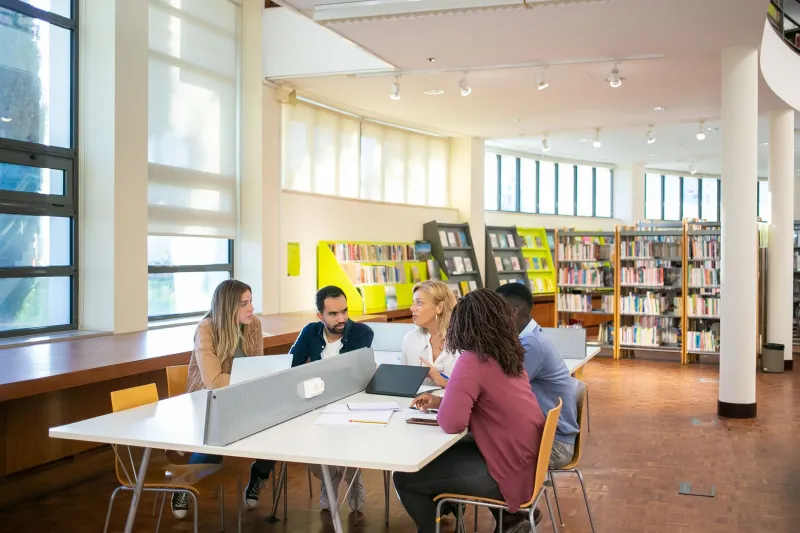
Public learning is most valuable when the goal is meaning-making, perspective-broadening, or practical judgment. A well-structured study group, a seminar discussion, a tutoring session, or even an informal conversation about course material can expose gaps in reasoning that solitary review never would. The social dimension is not a distraction from learning; for conceptual and practical knowledge, it is the learning.
The key word, however, is structured. Research on collaborative learning consistently shows that unstructured group study — where conversation drifts, roles are undefined, and accountability is absent — produces outcomes no better than studying alone. The benefits of public learning depend on intentional design: clear goals, defined roles, and a shared commitment to intellectual engagement rather than social comfort.
A Practical Framework for Intentional Matching
Before your next study session, spend two minutes answering three questions:
-
What type of knowledge am I working on right now? Is it procedural (a skill that needs practice), conceptual (an idea that needs understanding), or practical (a judgment that needs calibration)?
-
What does this type of knowledge actually require? Does it need repetition in silence, explanation to another person, feedback from someone more experienced, or exposure to real-world application?
-
Does my current environment match what this knowledge requires? If not, what is the smallest adjustment I can make?
This kind of intentional self-assessment — pausing before beginning work to align method with goal — is a foundational practice of mindful learning. It replaces the default of habit with the discipline of choice.
At Sổ Tay Học Phật, we believe that meaningful education begins not in the classroom or the library, but in the student's own awareness of what they are doing and why. Knowing what you need to learn is valuable. Knowing how that specific knowledge is best learned is transformative.