Stronger Together: Why the Shift Toward Collective Learning Is Changing American Schools for the Better
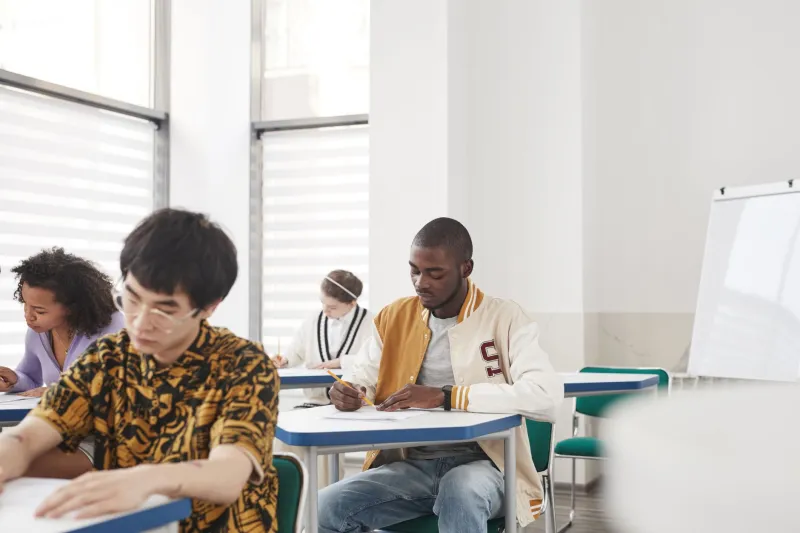
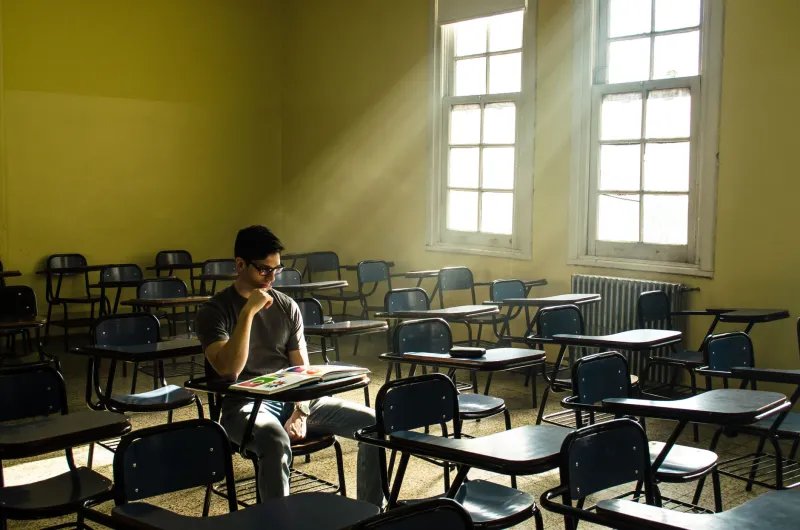
The image is familiar: a student hunched over a desk alone, racing against a clock, their grade determined entirely by individual performance on a standardized assessment. For most of American educational history, this scene has been considered not just normal but desirable—a fair test of personal merit, a reliable measure of what a student knows and is capable of achieving.
But that image is beginning to change. Across the United States, a growing number of schools, educators, and researchers are questioning whether the relentlessly individualistic structure of American academic achievement is serving students well—or whether it is quietly undermining the very outcomes it claims to measure.
The alternative gaining traction draws heavily from collective learning philosophies long embedded in Vietnamese and broader East Asian educational traditions. At Sổ Tay Học Phật, we believe this philosophical shift deserves careful, honest examination—not as a rejection of individual accountability, but as an expansion of what learning can look like when community becomes part of the method.
The Costs of Competing Alone
The data on student mental health in the United States has become difficult to ignore. According to the Centers for Disease Control and Prevention, persistent feelings of sadness and hopelessness among high school students reached 42 percent in 2021—a figure that represents a significant increase from previous decades. Academic anxiety is among the most frequently cited contributors, and researchers consistently point to the pressure of competitive, rank-based evaluation systems as a meaningful factor.
This is not simply a generational sensitivity. Cognitive science offers a structural explanation: when students perceive their academic environment as competitive rather than cooperative, the brain's threat-response systems activate in ways that measurably impair memory formation, critical thinking, and creative problem-solving. A student who fears falling behind a peer is not operating at full intellectual capacity—they are operating in a state of managed anxiety.
The competitive model, designed in theory to motivate, may in practice be suppressing the very cognitive functions that learning requires.
What Collective Learning Traditions Offer
In Vietnamese Buddhist educational philosophy, knowledge has never been understood as a private possession. The transmission of wisdom occurs within a community—between teacher and student, certainly, but also among students themselves, each of whom brings a distinct perspective that enriches the collective understanding of a shared subject.
This is not a soft or romantic notion. It reflects a sophisticated understanding of how knowledge actually functions: not as a fixed quantity to be transferred from one mind to another, but as something that deepens and clarifies through dialogue, disagreement, and mutual inquiry.
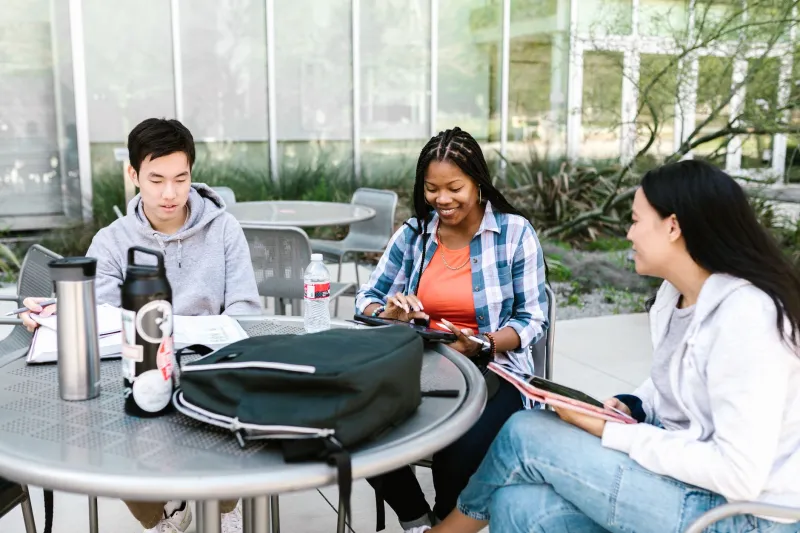
The concept of tăng đoàn—the community of practitioners who support one another's growth—translates naturally into an educational context. A classroom understood as a learning community, rather than a competitive arena, creates conditions in which students feel psychologically safe enough to take intellectual risks, admit confusion, and build on each other's insights.
These are not peripheral benefits. They are preconditions for genuine learning.
American Schools Making the Shift
Several American institutions have begun to operationalize these principles in concrete ways, with results that are drawing attention from researchers and policymakers alike.
High Tech High, a network of project-based learning schools in San Diego, California, has built its academic model around collaborative, interdisciplinary projects in which student success is measured in part by the quality of group work and peer contribution. Student outcomes at High Tech High—including college acceptance rates and long-term career trajectories—have consistently outperformed comparable schools using traditional competitive models.
In Chicago, the Urban Prep Academies have integrated structured peer mentorship into their academic program, pairing upperclassmen with younger students in subject-specific learning partnerships. Administrators report not only improved academic performance among mentees, but measurably higher retention and confidence among the mentors themselves—a finding consistent with research on the pedagogical value of teaching as a learning tool.
At the university level, institutions including the University of Michigan and Stanford have expanded the use of collaborative problem-solving frameworks in STEM courses, citing research demonstrating that students who work through complex problems in structured groups develop more durable conceptual understanding than those who work exclusively alone.
The Psychological Case for Community
Beyond academic performance metrics, the psychological benefits of community-focused learning environments are well-documented. A landmark study published in Educational Psychology Review found that students in cooperative learning structures reported significantly lower levels of test anxiety, higher intrinsic motivation, and greater satisfaction with their educational experience compared to peers in competitive environments.
Perhaps more importantly, collaborative learning cultivates skills that individual achievement models cannot easily measure or reward: the ability to listen carefully, to synthesize multiple perspectives, to disagree constructively, and to contribute to a shared goal. These are not merely social competencies—they are cognitive ones, and they are increasingly recognized as essential to success in both higher education and professional life.
Addressing the Objections
The transition toward collective learning models is not without legitimate concerns. Critics reasonably ask whether collaborative structures allow high-achieving students to be held back by peers who are less prepared, or whether group grades obscure individual accountability.
These are fair questions that well-designed programs must address directly. The most effective collective learning models do not eliminate individual assessment—they complement it. Students are still expected to demonstrate personal mastery; the difference is that the learning process itself is understood as a shared endeavor. Accountability structures within group work can and should be explicit, ensuring that every participant contributes meaningfully.
The goal is not to dissolve individual identity within the group. It is to recognize that individual growth is accelerated, not diminished, when it occurs in relationship with others.
A Different Vision of Academic Excellence
The Vietnamese tradition from which Sổ Tay Học Phật draws its inspiration has always understood education as a practice undertaken in community. The student who learns in isolation, however diligently, is missing something essential—not just social connection, but the intellectual friction and mutual accountability that genuine community provides.
As American schools continue to grapple with rising anxiety, declining engagement, and the limitations of standardized measurement, the collective learning model offers something valuable: a different vision of what academic excellence can mean. Not the student who outperforms every peer, but the student who grows alongside them—and in doing so, helps the entire community rise.
That vision is not utopian. It is, increasingly, supported by evidence. And it is already reshaping classrooms across the country.