Talk It Out: The Science Behind Why Peer Discussion Outperforms Solo Studying
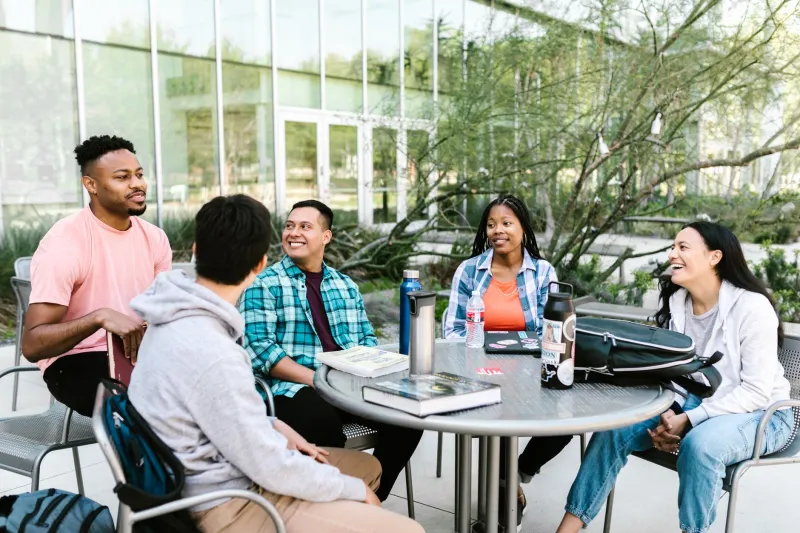
Ask most American college students about their group study sessions, and the description tends to follow a familiar arc: everyone gathers, someone pulls up their notes, a few problems get attempted, and then—gradually, inevitably—the conversation drifts. By the time the session ends, two hours have passed and the material has received perhaps forty minutes of genuine attention.
This is not an indictment of students. It is an indictment of how group study is typically structured—or rather, how it is typically left unstructured. Because when peer discussion is intentional, it becomes one of the most powerful learning tools in academic science. The gap between a social study hangout and a high-impact learning conversation is not about effort. It is about design.
What the Research Actually Says About Learning Through Conversation
The science here is unambiguous and has been accumulating for decades. In 1984, educational psychologist Benjamin Bloom identified one-on-one tutoring as producing learning gains two standard deviations above conventional classroom instruction—what researchers now call the "2 Sigma Problem." While one-on-one tutoring is not always accessible, peer discussion approximates many of its core mechanisms: immediate feedback, active elaboration, and the cognitive demand of explaining ideas in your own words.
More recently, research from Harvard physicist Eric Mazur demonstrated that students who explained concepts to each other immediately after instruction outperformed those who received additional direct instruction from the professor. The act of articulating understanding—of translating textbook language into your own—forces the brain to do something passive reading cannot: it forces construction.
Neurologically, this makes sense. When you explain something, you are not retrieving a stored file and playing it back. You are rebuilding the idea from its component parts, which strengthens the neural pathways associated with that knowledge and exposes gaps in your understanding that silent review would never reveal.
How Vietnamese Classroom Culture Built This In From the Start
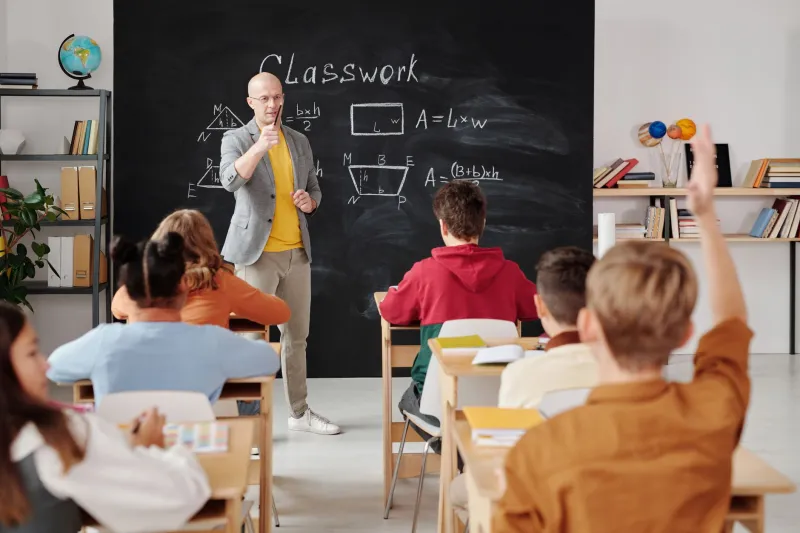
In Vietnamese educational settings, peer explanation and group dialogue have long been woven into the fabric of learning rather than treated as supplementary activities. Students are regularly expected to defend their reasoning, question their classmates' conclusions, and engage with material as something to be debated and refined rather than simply absorbed.
This tradition reflects a philosophical orientation toward knowledge as something that is constructed in relationship rather than delivered by authority. A student who can recite a definition has demonstrated memory. A student who can argue for or against its application has demonstrated understanding. Vietnamese learning culture has historically prioritized the latter.
For American students accustomed to individual performance metrics—the personal grade, the solo exam, the individual paper—this collaborative orientation can feel unfamiliar. But the underlying principle is transferable, and the research supports importing it directly into study group practice.
The Anatomy of a High-Impact Learning Conversation
Transforming a group session from social drift to academic substance requires structure. Here is a practical framework that draws on both learning science and the dialogic principles embedded in Vietnamese educational tradition:
Open with a Retrieval Challenge, Not a Review Begin each session by asking every member to write down—independently and without notes—the three most important ideas from the material being studied. Then compare responses. Disagreements are not problems; they are the starting points for the most valuable conversations in the session.
Assign Rotating Explanation Roles Designate one person to explain a concept completely while others listen critically and prepare questions. Rotate this role throughout the session. The explainer benefits from the act of articulation; the listeners benefit from evaluating an explanation that may contain gaps or errors.
Require Justification, Not Just Answers When a group member proposes a solution or interpretation, the group's job is not to agree or disagree immediately—it is to ask, "How did you get there?" Tracing reasoning aloud exposes the logic beneath an answer and reveals whether understanding is genuine or superficial.
Build in a Synthesis Moment At the close of each session, every member independently writes a three-to-five sentence summary of what the group concluded or clarified. Comparing these summaries at the start of the next session is a powerful retrieval exercise and an honest check on whether the conversation produced durable understanding.
Why Solo Studying Has a Ceiling
There is real value in solitary study—particularly for initial reading, note organization, and individual retrieval practice. But solo studying has a structural limitation that is rarely acknowledged: it cannot reveal what you don't know you don't know.
When studying alone, students build explanations in their own heads. Those explanations feel complete because they are never tested against an outside perspective. A peer who asks "Wait, why does that work?" or "I thought it was the opposite—can you explain that again?" provides something no textbook can: a live, responsive challenge to your current level of understanding.
This is precisely what makes peer discussion so difficult to replicate with flashcard apps or video lectures, regardless of how sophisticated those tools become. The productive friction of explaining to another person—the discomfort of not knowing how to answer a follow-up question, the effort of finding new language when your first attempt doesn't land—is itself the mechanism of deeper learning.
Making the Shift Practical
Not every study group needs to become a seminar. But every group session benefits from at least one intentional discussion moment. Start small: dedicate the first fifteen minutes of your next group session to a structured retrieval challenge and one round of peer explanation. Evaluate afterward whether those fifteen minutes felt more academically productive than the rest of the session.
Chances are, they will. And that data point—your own experience of what genuine collaborative learning feels like—is the most persuasive argument for doing it again.