The Attention Economy Is Winning: Why Boredom Tolerance Is Now an Academic Superpower
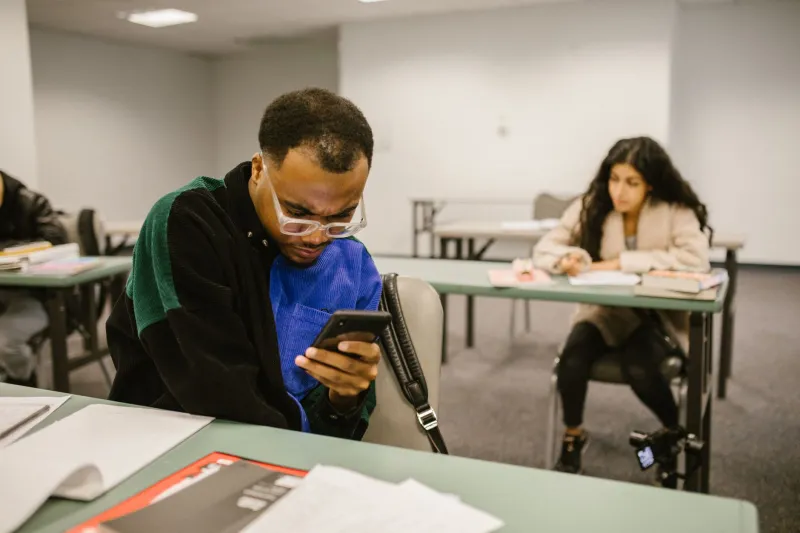
Let us be direct about something that most academic advice carefully avoids: the single greatest threat to deep learning in American universities today is not poor study habits, inadequate sleep, or even financial stress. It is the systematic erosion of the capacity to remain present with difficult, unrewarding material long enough for understanding to take root.
The mechanism behind this erosion is not mysterious. It is the attention economy — the vast, meticulously optimized infrastructure of apps, platforms, and notification systems designed by some of the most sophisticated engineers in human history to capture and hold your attention. They are extraordinarily good at their job. And their success comes at a direct cost to yours.
What Chronic Stimulation Does to a Learning Brain
The brain's dopamine system was not designed for the environment most American college students now inhabit. Dopamine, often described loosely as the brain's "pleasure chemical," is more accurately understood as its anticipation and reward-seeking chemical. It surges not when you receive something pleasurable, but when you encounter an unpredictable signal that something rewarding might be coming.
This is precisely the mechanism that makes social media, short-form video, and notification-heavy apps so neurologically compelling. The unpredictable arrival of new content — a like, a reply, a new video — keeps the dopamine system in a state of low-grade, continuous activation.
Over time, this recalibrates the brain's threshold for what counts as sufficiently stimulating. Activities that do not produce rapid, unpredictable novelty — reading a dense academic text, working through a problem set, writing a sustained argument — begin to feel not merely difficult, but genuinely intolerable. The brain has learned, through repeated reinforcement, that boredom is a problem to be solved immediately rather than a state to be inhabited.
This is not a metaphor. Neuroimaging research has documented measurable changes in the default mode network — the brain region associated with sustained reflection and self-directed thought — in heavy social media users. The capacity for what researchers call "undirected mind-wandering," which is actually a prerequisite for creative insight and deep comprehension, is being systematically compressed.
The Competitive Consequence
Here is where this becomes a matter of genuine academic consequence rather than simply a wellness concern.
The skills that distinguish students who produce exceptional work — synthesizing complex arguments, sustaining focus across a two-hour problem-solving session, sitting with confusion long enough to develop genuine understanding — all require the ability to tolerate extended periods of low external stimulation. These are not skills that can be downloaded or hacked. They are built through repeated exposure to the very experience that most students are now conditioned to escape: boredom.
This creates an unusual competitive landscape. In an environment where chronic stimulation is the norm, the student who can genuinely focus for ninety uninterrupted minutes on a single difficult problem is operating with a significant cognitive advantage. Not because they are naturally more disciplined, but because they have preserved — or deliberately rebuilt — a capacity that their peers have allowed to atrophy.
The Opinion Worth Stating Plainly
The framing of this as an individual wellness issue lets structural forces off the hook. The platforms that have recalibrated millions of young people's attention systems were not designed with educational outcomes in mind. They were designed for engagement — a metric that has nothing to do with depth, comprehension, or long-term growth.
Students deserve to understand this clearly. The discomfort you feel when you sit down to study without background noise, without your phone within reach, without the option to switch to something more immediately rewarding — that discomfort is not a sign that you lack discipline. It is the entirely predictable response of a brain that has been trained, over thousands of hours, to expect constant novelty. Recognizing this is not an excuse. It is a necessary starting point.
Rebuilding Deep Focus: Specific Practices
The neurological research on attention restoration suggests that the capacity for sustained focus is not fixed. It can be rebuilt through deliberate practice, in much the same way that physical endurance is rebuilt after a period of inactivity. The following exercises are not comfortable. That is precisely the point.
The Scheduled Boredom Block. Set aside ten minutes each day — not for meditation, not for journaling, not for anything productive — simply to sit without external input. No phone, no music, no task. Notice the urge to reach for stimulation. Do not act on it. Extend this block by two minutes each week. This is not a wellness exercise. It is attention training.
The Single-Tab Study Session. When studying, work with only the specific resource you need open. No secondary browser tabs, no music streaming, no messaging apps running in the background. If you need to look something up, write the question down and address it at a designated break. The friction this creates is the training stimulus.
The Friction-Forward Reading Practice. Choose a text that is genuinely difficult — above your current comfortable reading level. Read it without highlighting, without pausing to check your phone, for thirty minutes. Then write, from memory, what you understood. Repeat this process three times per week. The discomfort of not understanding immediately, without the escape of a quick search or a distraction, is where tolerance is built.
The Technology Sunset. Establish a firm cutoff — two hours before your study session ends — after which you do not access social media or short-form video. The neurological residue of dopamine-seeking behavior does not clear instantly. Giving your brain a buffer period before demanding deep focus is not indulgence; it is strategy.
Patience as a Cognitive Discipline
At the heart of boredom tolerance is something that the pace of contemporary student life actively discourages: patience with the slow, unglamorous process of understanding something difficult. There is no notification when comprehension deepens. There is no metric that captures the moment a concept finally integrates with prior knowledge. The reward is internal, delayed, and entirely invisible to the algorithms that govern most students' daily attention.
This is why cultivating boredom tolerance is, at its core, an act of reclaiming your own cognitive sovereignty. It is a decision to prioritize the kind of reward that does not come with a sound effect.
In an attention economy designed to win at every moment, the student who can choose depth over novelty is not simply more academically effective. They are genuinely harder to distract — and that, in the current landscape, is a rare and consequential advantage.