Why Finishing the Chapter Doesn't Mean You've Read It: The Science of Passive Reading and What to Do Instead

The Familiar Ritual That Isn't Working
You sit down with your textbook. You turn to the assigned chapter. You read — or at least your eyes move across the lines in the right direction. Forty minutes later, you close the book. You've covered the material. You've done what was asked.
And yet, if someone asked you right now to summarize what you just read, something uncomfortable happens. The ideas feel slippery. The details blur together. You remember that something was explained, but not quite what, or why it mattered.
This experience is so common among college students that researchers have given it a name: illusion of knowing. It describes the gap between the feeling of having learned something and the reality of whether that learning will hold up under retrieval conditions — like an exam, a seminar discussion, or a professional situation that demands real application.
The problem is not attention span. It is not intelligence. It is the method.
What Your Brain Is Actually Doing While You Read
To understand why passive reading fails so consistently, it helps to understand what the brain requires in order to encode information into long-term memory.
Neuroscientists distinguish between two modes of cognitive engagement: shallow processing and deep processing. Shallow processing involves surface-level contact with information — recognizing words, following narrative, moving through content without constructing meaning. Deep processing involves connecting new information to existing knowledge, generating predictions, asking questions, and building mental models.
Passive reading — the kind most students default to — is almost entirely shallow processing. You are decoding language, not building understanding. The words enter your working memory, which has a famously limited capacity, and unless they are actively worked with, they fade before they ever reach long-term storage.
Highlighting makes this worse, not better. When you highlight a passage, your brain receives a small signal that the work is done — that the important thing has been marked and therefore retained. But the act of highlighting requires no real cognitive effort, which means it produces no real encoding. Research by psychologists John Dunlosky and colleagues, published in a widely cited review of study techniques, rated highlighting and re-reading among the least effective strategies students commonly use.
The Attention Problem Hidden Inside the Reading Problem
There is a second dimension to this challenge that goes beyond technique: the modern reading environment is actively hostile to the kind of focused attention that deep processing requires.
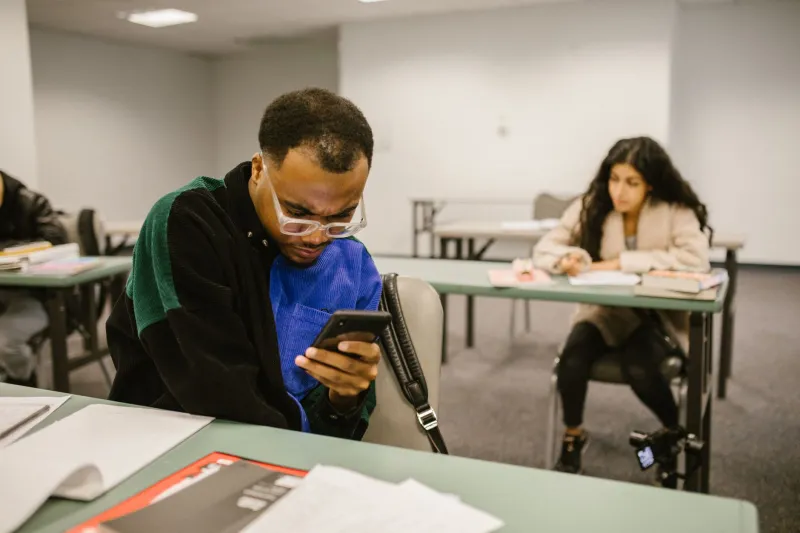
Students today read in conditions that would have been unimaginable to previous generations — phones nearby, notifications arriving, browser tabs open, music playing. Each of these elements competes for the attentional resources that meaningful reading demands. Research on cognitive load theory suggests that the brain has a finite capacity for processing new information simultaneously, and that divided attention during learning dramatically reduces encoding efficiency.
This means that a student who reads for thirty minutes in genuine silence and focused engagement will typically retain more than one who reads for ninety minutes in a distracted, fragmented state — even if the second student covers far more pages.
The volume of reading is not the variable that matters most. The depth of attention brought to it is.
Techniques That Actually Change the Outcome
The good news is that the research on effective reading is not vague or theoretical. There are specific, evidence-backed practices that transform textbook reading from a passive ritual into a genuine learning experience.
Read with questions, not just eyes. Before beginning a section, formulate specific questions you expect the text to answer. This is sometimes called "purposive reading," and it works because it shifts your brain from passive reception to active search. You are no longer reading to cover material; you are reading to find something. That shift in intent changes how the brain processes what it encounters.
Stop and retrieve before moving on. After reading a paragraph or a section, close the book and write down — in your own words, without looking — what you just read. This technique, known as the retrieval practice effect or the testing effect, is one of the most robustly supported findings in cognitive psychology. The act of pulling information from memory, even imperfectly, strengthens the neural pathways associated with that information far more effectively than re-reading it.
Explain it to someone who isn't there. The Feynman Technique, named after physicist Richard Feynman, involves explaining a concept as simply and clearly as possible, as if teaching it to someone unfamiliar with the subject. Where your explanation breaks down or becomes vague, you have identified exactly what you do not yet understand — which is far more valuable than the false confidence that comes from recognizing familiar words on a page.
Annotate with questions, not just highlights. Rather than marking what seems important, write questions in the margins. "Why does this follow from the previous point?" "What would happen if this assumption were wrong?" "How does this connect to what we discussed in class?" These annotations force your brain into evaluative mode, which is a form of deep processing.
Use spaced sessions rather than single sittings. Reading the same material across multiple shorter sessions — separated by time — produces dramatically better retention than reading it once in a single long block. The spacing effect is one of the oldest and most reliable findings in memory research, and it is almost entirely ignored by students who read chapters the night before they are due.
The Mindful Reader vs. the Efficient Reader
There is a distinction worth drawing here between two different orientations toward reading. The efficient reader wants to get through the material. The mindful reader wants to be changed by it.
In the traditions that inform this platform's perspective, learning is understood as a process of genuine transformation — not the accumulation of information, but the development of a different quality of mind. That aspiration is not merely philosophical. It maps onto what cognitive science tells us about how lasting knowledge is actually built: through engagement, not exposure; through struggle, not speed; through presence, not coverage.
Finishing the chapter is the beginning of reading it, not the end.