Empty Your Mind to Fill Your Potential: The Monastic Secret to Beating Decision Fatigue
By the time a typical American college student reaches their third hour of studying, they have already made hundreds of micro-decisions — which passage to highlight, whether to re-read a paragraph, how to organize their notes, which distraction to ignore next. By evening, when it matters most — choosing between reviewing for tomorrow's exam or skipping it — the mental tank is dangerously close to empty. Researchers call this phenomenon decision fatigue, and it is quietly sabotaging academic performance across the United States.
What if the antidote was not another productivity app, a better planner, or a more aggressive schedule? What if it was, quite literally, nothing?
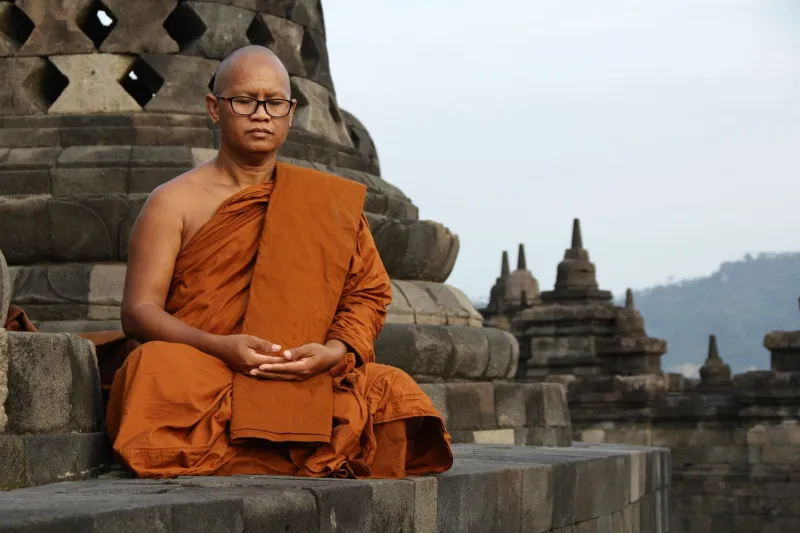
Deep inside Vietnamese Buddhist monasteries, monks have practiced a form of structured cognitive emptiness for centuries. It is not laziness. It is not escapism. It is a deliberately engineered mental pause — and modern neuroscience is beginning to confirm what those monks understood intuitively: the brain is not designed for uninterrupted output. It is designed for rhythm.
What Decision Fatigue Actually Does to a Student's Brain
The concept of decision fatigue was popularized by psychologist Roy Baumeister's research on ego depletion — the idea that willpower and cognitive control draw from a finite reservoir. Each choice, however trivial, withdraws from that reservoir. When the reservoir runs low, the brain does not simply slow down. It starts taking shortcuts. Students begin defaulting to familiar, comfortable answers rather than thoughtful ones. They procrastinate on complex tasks. They make impulsive choices — binge-watching instead of reviewing, skipping breakfast, agreeing to social plans they will later regret.
A 2011 study published in the Proceedings of the National Academy of Sciences found that judges granted parole at dramatically higher rates right after meal breaks compared to late-morning or late-afternoon sessions. The pattern was stark: cognitive restoration directly improved decision quality. The same principle applies to any student sitting in a library at 9 p.m., staring at a problem set.
The challenge is not that students lack intelligence or discipline. The challenge is that American academic culture rarely builds in the kind of deliberate cognitive rest that would allow intelligence and discipline to function at full capacity.
The Monastery Model: Strategic Emptiness as a Practice
In Vietnamese Buddhist tradition, meditation breaks within a learning day are not optional wellness perks. They are structural — woven into the rhythm of monastic education the way lectures and recitations are woven into a university schedule. Monks refer to this as creating space for the mind to return to itself. The Vietnamese phrase buông xả — loosely translated as "releasing" or "letting go" — captures the intentionality behind this practice. It is not passive rest. It is an active decision to temporarily suspend cognitive engagement.
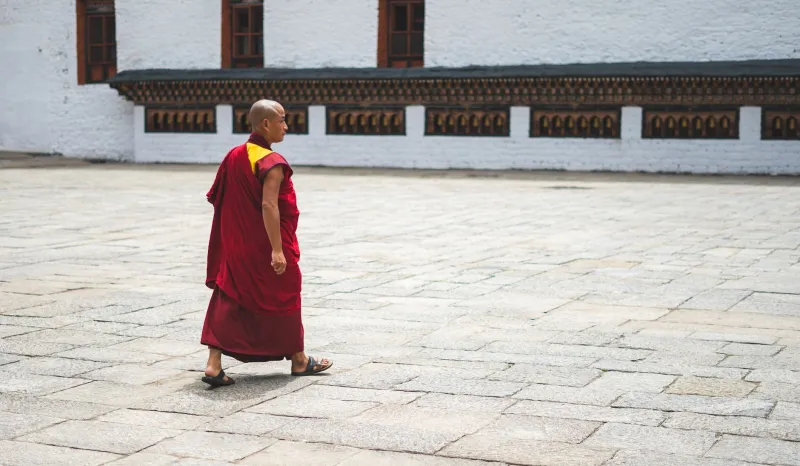
Crucially, this is different from scrolling through social media or watching a short video. Those activities replace one stream of cognitive input with another. True mental fasting, as practiced in Vietnamese monasteries, involves deliberately withdrawing from all input — sitting quietly, focusing on breath, or engaging in slow, repetitive physical movement like walking meditation. The goal is not to solve problems during this time. The goal is to stop solving problems entirely.
Vietnamese educators who trained within or alongside these monastic traditions understood that a student who pauses strategically learns more effectively than one who pushes relentlessly forward. The pause is not a concession to weakness. It is an investment in subsequent clarity.
The Neuroscience Behind Doing Absolutely Nothing
When the brain enters a state of quiet, unfocused rest — what neuroscientists call the default mode network (DMN) — it does not go offline. Instead, it begins a form of internal housekeeping. It consolidates recently acquired information, draws connections between disparate concepts, and essentially prepares the mental workspace for the next round of focused effort.
Researchers at the University of California, Santa Barbara have demonstrated that mind-wandering — when it occurs without the interference of screens or external stimulation — significantly boosts creative problem-solving and insight. Meanwhile, studies on ultradian rhythms suggest the brain naturally cycles through peaks and troughs of alertness approximately every 90 to 120 minutes. Fighting those troughs with caffeine or sheer willpower does not eliminate them. It simply makes the eventual crash harder.
The monks were not working against biology. They were working with it.
Practical Routines: Bringing Monastic Breaks into Your Academic Day
Adapting this practice for a busy American student does not require a monastery or a meditation cushion. It requires intention and a willingness to protect short windows of genuine cognitive rest. Here are four approaches grounded in both Vietnamese tradition and contemporary learning science:
1. The 90-Minute Rule with a True Rest Window Structure your study blocks around 90-minute intervals. When the block ends, resist the urge to immediately check your phone. Instead, spend five to ten minutes doing nothing stimulating — sit by a window, take a slow walk outside without earbuds, or simply breathe. This is not wasted time. It is the phase where your brain files what you just learned.
2. Morning Decision Minimization Monks in Vietnamese traditions often maintain highly standardized morning routines precisely to preserve cognitive resources for the day's more demanding work. Students can adopt the same principle: decide your outfit, meals, and commute route the night before. Remove the trivial decisions from your morning so your decision-making capacity is intact when you actually need it.
3. Scheduled Stillness Before High-Stakes Moments Before an exam, an important meeting with a professor, or a difficult study session, take ten minutes of deliberate quiet. No music, no podcast, no review. Sit with your thoughts and let them settle. This practice — a direct echo of pre-lecture meditation in Vietnamese monastic schools — has been shown to reduce cortisol levels and improve working memory performance.
4. The Digital Sunset Vietnamese monks do not carry the day's noise into the evening. Students can mirror this by establishing a hard stop on screens at least an hour before sleep. The final hour becomes a space for reflection, light reading, or simple stillness. Sleep quality improves. Morning clarity follows.
Reframing Boredom as a Resource
American academic culture has developed a reflexive hostility toward boredom. Idle moments are immediately filled — with notifications, playlists, podcasts, or scrolling. Yet boredom, in its truest sense, is simply the experience of a mind not yet occupied. And an unoccupied mind, given the chance, will do extraordinary things: it will synthesize, imagine, and restore.
Vietnamese monastic education never pathologized stillness. It cultivated it. The student who could sit with an empty mind was considered more prepared — not less — than the student who was perpetually busy.
For overwhelmed American students navigating packed schedules, competitive pressures, and the relentless noise of digital life, that reframing may be the most radical — and most practical — insight available. Strategic boredom is not a retreat from ambition. It is the foundation that makes ambition sustainable.
The monks knew this. Now the neuroscientists are catching up. The only question is whether students will give themselves permission to follow suit.