Pen, Keyboard, or Both? What the Note-Taking Research Actually Settles — and What It Doesn't

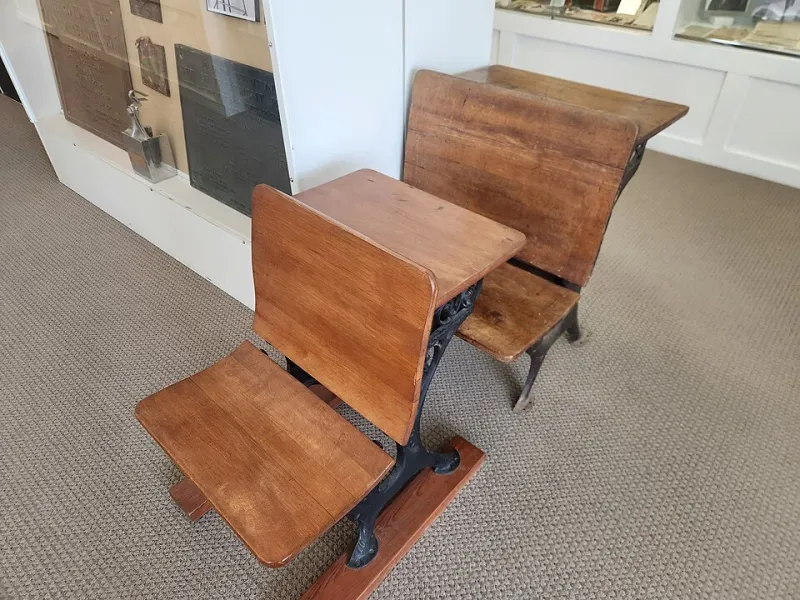
Photo: Bernard Gagnon, CC BY-SA 4.0, via Wikimedia Commons
Few classroom debates generate as much heat as the one over note-taking. One camp insists that handwriting is the only way to truly learn; the other points out that laptops are faster, searchable, and frankly more practical for a chemistry lecture that covers forty reactions an hour. Both sides tend to overstate their case. The research, read carefully, is more interesting — and more nuanced — than either.
What the Famous Studies Actually Found
The modern debate traces largely to a 2014 study by Pam Mueller of Princeton and Daniel Oppenheimer, then at UCLA. Students who took longhand notes outperformed laptop users on conceptual questions, even though laptop note-takers captured more words. The researchers' explanation became famous: laptop users tend to transcribe verbatim, a shallow mode of processing, while the slowness of handwriting forces summarizing — what learning scientists call generative processing.
But the follow-up literature complicated the story. Later replications found that the handwriting advantage often disappeared when laptop users were instructed to summarize rather than transcribe. In other words, the pen itself was not magic; the mindset was. A 2021 review in Psychological Science in the Public Interest concluded that while longhand note-taking shows reliable benefits in some contexts, the differences are smaller and more conditional than headlines suggested — and that note quality matters more than the instrument.
Two other findings deserve mention. First, reviewing notes matters more than taking them: students who never revisit their notes lose most of the benefit regardless of format. Second, laptop use carries a documented distraction cost — studies have found that students in laptop-permitted sections perform worse even when the laptops belong to their neighbors.
The Structured Methods, Briefly
Beyond the pen-versus-keyboard question, several named systems have earned their reputations.
The Cornell method divides the page into a narrow cue column, a wide notes area, and a summary strip at the bottom. Its real power is built-in review: covering the notes and testing yourself against the cues is retrieval practice, one of the most robust findings in all of learning science. It works in a notebook or a template app equally well.
Concept mapping turns notes into a diagram of connected ideas rather than a sequence of lines. It shines in courses where relationships matter more than order — biology systems, literature themes, history causes. Research on meaningful learning suggests mapping encourages students to see structure, though it is slow for fast-paced lectures.
Sketchnoting combines words with simple drawings. Evidence suggests that drawing — even badly — deepens encoding through what researchers call the drawing effect. You do not need artistic skill; a crude diagram of a supply curve often beats a paragraph of transcription.
A Decision Guide by Subject
- Fast-paced STEM lectures (organic chemistry, physics): Type if you must to keep up, but rework the notes by hand afterward, converting them into worked examples and diagrams. The post-lecture rewrite is where the learning happens.
- Discussion-based humanities seminars: Handwrite. The pacing is slow, the ideas are conceptual, and verbatim transcription is the enemy. Focus on arguments and your own questions in the margins.
- Courses heavy on processes and systems (anatomy, history, economics): Try concept maps or sketchnotes as your primary format, at least for review sessions.
- Anything with dense terminology: Cornell, on any medium. The cue column is essentially a pre-made flashcard deck.
- Math and problem-solving courses: Paper, without exception. Equations, notation, and worked steps fight the keyboard at every turn.
The Honest Bottom Line
The instrument matters less than three things: whether you are summarizing in your own words, whether you revisit the notes within a day or two, and whether your review involves self-testing rather than rereading. Choose the tool that lets you do those three things consistently. For some students and some subjects that is a notebook; for others it is a tablet with a stylus or a well-structured digital folder.
In the spirit of Sổ Tay Học Phật — literally a handbook of learning — the point is not to win an argument about pens and keyboards. It is to treat note-taking as what it truly is: not a record of the lecture, but the first rehearsal of your own understanding.